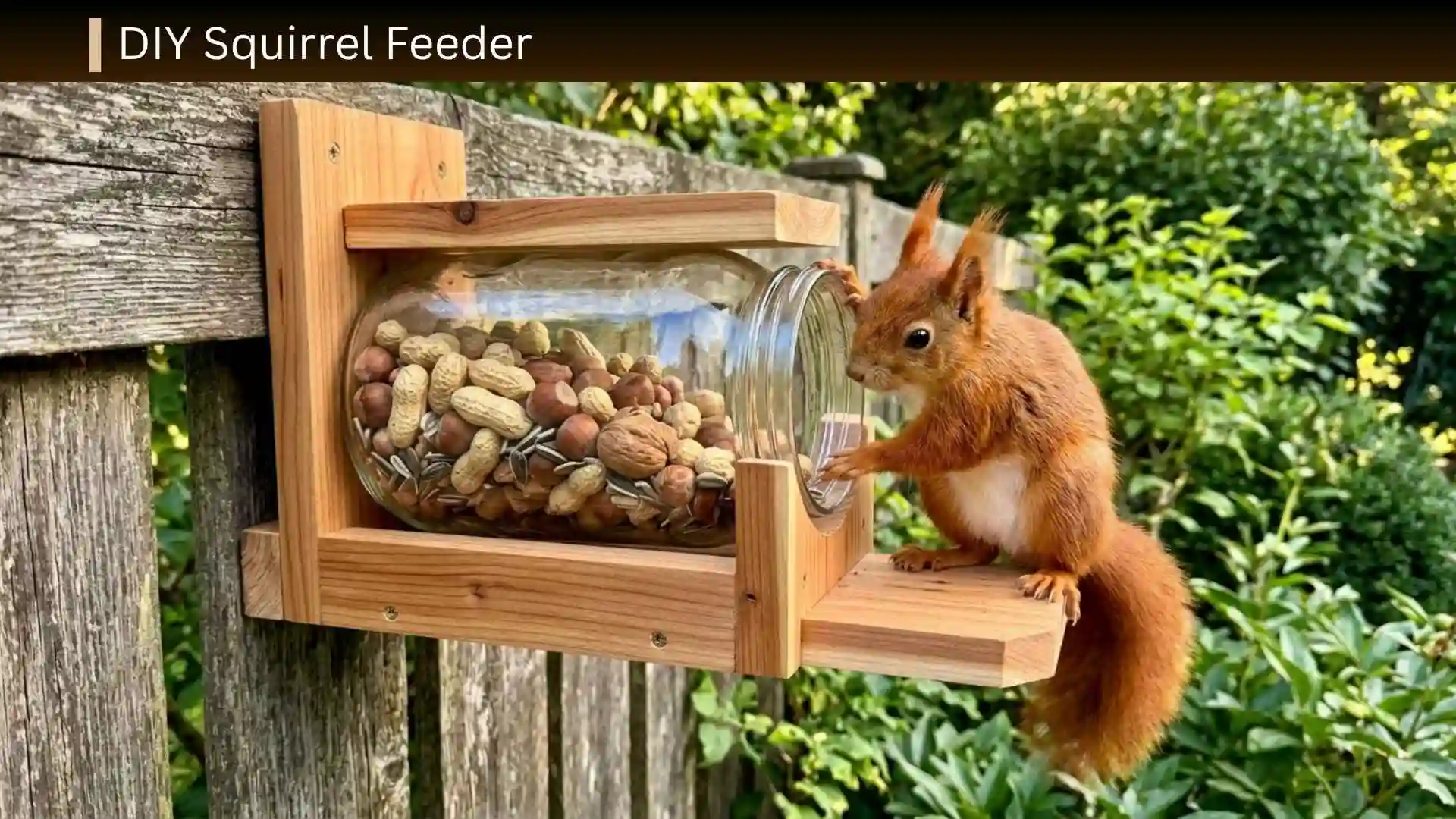
If you want to attract squirrels to your backyard without buying an expensive feeder, a DIY squirrel feeder is an easy project to start with. You can build a simple feeding station from a few pieces of untreated wood and basic hardware, and you do not need advanced woodworking skills to make one.
For most beginners, a small wooden platform feeder with a corn-cob holder is the best place to start. It is inexpensive, easy to clean, simple for squirrels to access, and easy to repair if weather or wildlife damages it.
This guide explains how to build that feeder step by step, including the materials, measurements, tools, mounting method, food choices, placement tips, cleaning routine, and common problems you may encounter. You’ll also find several alternative DIY squirrel feeder designs if you want something more decorative or weather-resistant.
Before intentionally feeding wildlife, check your local rules and consider whether attracting squirrels and other animals is appropriate for your property. Feeding wildlife can sometimes create sanitation, behavioral, or nuisance problems, so a feeder should be used thoughtfully rather than as a replacement for natural foraging.
The Best Beginner DIY Squirrel Feeder
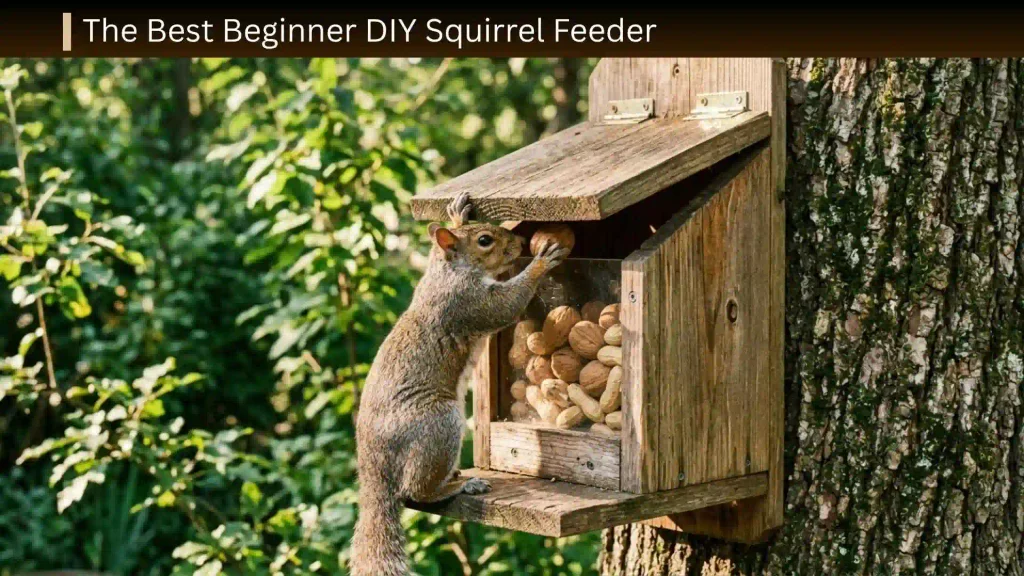
A simple wooden platform with a dedicated corn holder offers a good balance between ease, cost, and usefulness.
The basic design consists of a small platform, a raised back or mounting board, and a secure holder for a dried corn cob. The platform gives the squirrel room to sit while eating, while the corn holder keeps the food from immediately falling onto the ground.
Why This Design Works Well
A good squirrel feeder does not need complicated mechanisms. In fact, simplicity has several advantages.
A basic platform is:
- Easy to build with common tools
- Easy for squirrels to climb onto
- Simple to refill
- Easy to clean
- Inexpensive to repair
- Suitable for nuts, seeds, and dried corn
- Easy to attach to a tree, fence, or sturdy post
- Simple enough for a beginner DIY project
The open design also makes it easy to see whether food is still fresh and whether rain has collected on the platform.
Basic Project Details
For a beginner-friendly version, use these approximate specifications:
| Project detail | Recommended starting point |
| Difficulty | Beginner |
| Build time | About 30–60 minutes |
| Platform size | Approximately 10 × 8 inches |
| Wood thickness | About ¾ inch |
| Main material | Untreated outdoor-suitable wood |
| Tools | Saw, drill, screwdriver, sandpaper |
| Food holder | Exterior-rated screw or dowel |
| Best feature | Simple access and easy cleaning |
These dimensions are a starting point rather than a rigid requirement. You can make the platform somewhat larger or smaller depending on the available material and the squirrels in your area.
Materials and Tools You Will Need
Gather everything before you begin. Having the pieces ready makes the project considerably easier.
Materials
For one basic feeder, prepare:
- One wooden board for the platform
- One smaller wooden board for the back or mounting surface
- A few exterior-rated screws
- One longer exterior-rated screw for holding dried corn
- Sandpaper
- Optional small pieces of wood for a raised edge
- Optional roof material if you want additional rain protection
Use clean, sturdy wood that is appropriate for outdoor use. Avoid wood that is rotten, contaminated, splintered badly, or previously used for storing chemicals.
Tools
You can build the feeder with basic DIY tools:
- Measuring tape
- Pencil
- Saw
- Drill
- Screwdriver or driver bit
- Sandpaper
- Safety glasses
If you do not have a power saw, ask your local hardware or lumber store whether they can make simple cuts for you. That can turn this into an almost assembly-only project.
How to Build a DIY Squirrel Feeder Step by Step
The easiest way to build this feeder is to make the platform first and then attach the mounting board.
Step 1: Measure the Platform
Mark a piece of wood approximately 10 inches long and 8 inches wide.
This gives squirrels enough room to stand and eat without making the feeder unnecessarily large.
If your available scrap wood is a different size, don’t worry. A similar rectangular platform can work as long as it is strong enough to support the animal and food.
Step 2: Cut and Sand the Wood
Cut the platform to your chosen dimensions.
Next, sand the edges and corners thoroughly.
Pay particular attention to:
- Sharp corners
- Splintered edges
- Areas around drilled holes
- Cut ends of the wood
The goal is a smooth feeding surface without exposed splinters or unnecessarily sharp edges.
Step 3: Prepare the Mounting Board
Cut a second piece of wood to act as the rear mounting board.
A piece roughly 8–10 inches high can work well for a small feeder.
Position the mounting board vertically along the back edge of the platform. This gives you a solid surface for attaching the feeder to a tree, post, or fence.
Step 4: Attach the Platform
Place the platform against the bottom portion of the mounting board.
Pre-drill the screw holes to reduce the chance of splitting the wood.
Drive two or more exterior-rated screws through the mounting board and into the platform.
Check the joint by gently pushing down on the platform.
It should feel solid rather than flexible or wobbly.
Step 5: Add a Corn Holder
A dried corn cob can be attached using a sturdy exterior-rated screw.
Drill a suitable pilot hole in the mounting board or another secure part of the feeder. Install the screw so that enough of it remains exposed to hold the corn cob firmly.
The holder should be secure but should not have a sharp point sticking into an area where an animal could be injured.
If you prefer, you can use a sturdy wooden dowel or another purpose-built food holder instead.
Step 6: Add a Raised Edge
A raised edge is optional.
If food frequently rolls off the platform, attach a narrow strip of wood around the front and sides.
Keep the edge low enough that squirrels can comfortably reach the food.
Do not completely enclose the feeding surface unless you are deliberately building a different feeder design.
Step 7: Check Every Connection
Before installing the feeder outdoors, inspect every screw and joint.
Look for:
- Protruding screw tips
- Loose boards
- Sharp edges
- Cracks
- Weak mounting points
- Areas where water could collect
Give the platform a firm shake. If it moves substantially, reinforce it before putting food on it.
How to Mount the Squirrel Feeder

A good feeder can become useless if it is mounted poorly.
The feeder needs to remain stable when a squirrel jumps onto it, and the mounting hardware needs to support both the feeder and the repeated movement of wildlife.
Mounting It to a Tree
A sturdy tree can provide a convenient mounting point.
Position the feeder where squirrels can reach it from nearby branches, but avoid placing it directly beside a busy walkway or doorway.
Use appropriate outdoor-rated hardware and make sure the mounting board sits firmly against the tree.
Avoid damaging valuable trees unnecessarily. If a non-invasive mounting method is practical for your situation, consider using it.
Mounting It to a Post
A dedicated post can give you greater control over the feeder’s position.
This is useful if you want the feeding station away from your house or bird feeders.
Make sure the post is firmly installed and cannot easily lean or fall when the feeder is used.
Mounting It to a Fence
A strong fence can work for a lightweight feeder.
Check the fence first. A thin decorative fence may not provide enough support, particularly if squirrels jump onto the feeder from above.
Where Should You Put a Squirrel Feeder?
Placement affects whether squirrels discover the feeder and whether the feeding station becomes a nuisance.
A useful location usually provides a combination of accessibility, stability, visibility, and separation from high-traffic areas.
Choose a Location Near Natural Squirrel Activity
If squirrels already travel through your yard, look for places where you regularly see them moving between trees, shrubs, or other natural cover.
You don’t need to put the feeder in the middle of an open lawn.
A location near established squirrel activity may be discovered more quickly.
Give Squirrels a Comfortable Approach
Squirrels are agile animals, so they can reach feeders from branches, fences, and other structures.
Position the feeder so there is a practical route to it.
If the feeder is isolated in a completely exposed area, squirrels may be less comfortable using it.
Keep It Away From Busy Human Areas
Avoid placing the feeder immediately beside:
- Exterior doors
- Children’s play areas
- Busy walkways
- Areas where pets spend unsupervised time
- Outdoor dining spaces
A little separation makes the feeding station easier to manage.
Consider Other Wildlife
A squirrel feeder does not only attract squirrels.
Depending on your area, spilled food may also attract birds, raccoons, rodents, and other wildlife.
Think about this before choosing the location.
If attracting additional wildlife would create a problem, a dedicated feeder may not be the right solution.
Are You Building a Squirrel Feeder to Protect a Bird Feeder?
Some people search for a DIY squirrel feeder because squirrels repeatedly raid their bird feeders.
A separate feeding station may sometimes help redirect squirrel activity, although it is not a guaranteed solution.
If you want to try this approach, avoid placing the squirrel feeder immediately beside the bird feeder. A separate location creates a clearer distinction between the two feeding areas.
Also remember that squirrels are persistent and intelligent animals. Providing food in one location does not guarantee that they will stop visiting another location.
If the real goal is protecting bird food, you may also need to improve bird-feeder placement and use suitable squirrel-resistant barriers.
What Should You Put in a Squirrel Feeder?
Food choice is one of the most common questions surrounding squirrel feeders.
Possible foods include:
- Unsalted peanuts
- Walnuts
- Pecans
- Acorns
- Dried corn
- Cracked corn
- Sunflower seeds
- Small amounts of suitable fresh fruit
Keep portions reasonable and avoid relying on processed human foods.
A feeder should supplement natural foraging rather than become an attempt to provide an unlimited food supply.
Avoid Feeding Processed Junk Food
Human snacks are not a good foundation for wildlife feeding.
Avoid making foods such as salty chips, heavily seasoned foods, candy, or sugary baked goods part of the regular feeding routine.
If you choose to provide food, simple, minimally processed options are a more sensible choice.
Start With Small Quantities
Don’t fill the feeder to its maximum capacity on the first day.
Start with a small amount and observe what happens.
If food remains untouched for a long period, reduce the amount.
If it disappears rapidly, you can decide whether a modest increase is appropriate.
This approach also reduces the amount of food sitting outdoors and becoming wet or spoiled.
How to Keep a Squirrel Feeder Clean
Cleaning is an important part of maintaining an outdoor feeding station.
Remove old food regularly, particularly after wet weather.
Inspect the platform for:
- Mold
- Wet food
- Droppings
- Standing water
- Damaged wood
- Loose hardware
Clean the feeding surface as needed and allow it to dry properly before adding fresh food.
Why Drainage Matters
Rain can turn a flat feeding platform into a small puddle.
If your design allows water to collect, consider adding small drainage holes in appropriate locations.
Do not make holes so large that food immediately falls through them.
A slight slope or roof can also help reduce water exposure.
Six More DIY Squirrel Feeder Ideas
The basic platform is the easiest place to start, but it is not your only option.
DIY Corn-Cob Feeder
A dedicated corn holder can be extremely simple.
Use a sturdy piece of wood as the mounting surface and attach a dried corn cob using a secure holder.
This design uses very few materials and is particularly suitable when you want the quickest possible project.
DIY Squirrel Picnic Table
For a decorative backyard project, build a miniature picnic table.
Use a small tabletop and two supporting legs or bench-style supports. Add a secure mounting point underneath.
The important thing is not the decorative appearance but the stability of the structure.
Sand all exposed edges and make sure the table cannot easily tip.
DIY Covered Squirrel Feeder
If rain is a major problem, add a small roof above your platform.
The roof should extend beyond the feeding area enough to provide useful protection without making access difficult.
A slight roof angle can encourage rainwater to run away from the food.
DIY Scrap-Wood Squirrel Feeder
Scrap wood is ideal for experimenting with feeder designs.
Before using leftover boards, inspect them carefully.
Do not use pieces that are:
- Rotten
- Moldy
- Heavily splintered
- Contaminated
- Previously treated with unknown chemicals
A small amount of safe scrap wood can be enough to build a functional platform.
DIY PVC Squirrel Feeder
PVC pipe can be adapted into an enclosed feeder.
This approach can protect some food from rain and can hold more food than a small open platform.
However, make sure the openings are large enough for the intended wildlife and that there are no sharp cut edges.
The container should never create a space in which an animal can become trapped.
DIY Hanging Squirrel Feeder
A hanging design can be made from a small wooden platform or suitable container attached to a strong rope or chain.
The main challenge is stability.
If the feeder swings excessively every time a squirrel lands on it, the animal may have difficulty eating.
Use a strong attachment point and inspect the rope, chain, and mounting hardware regularly.
Which DIY Squirrel Feeder Should You Build?
Different designs work better for different situations.
| Your priority | Recommended design |
| Easiest project | Corn-cob holder |
| Beginner woodworking | Wooden platform |
| Lowest material cost | Scrap-wood platform |
| Decorative appearance | Mini picnic table |
| Better rain protection | Covered feeder |
| Larger food capacity | PVC or hopper-style design |
| Flexible placement | Hanging feeder |
For most first-time builders, the wooden platform feeder is the best overall choice because it is simple, visible, accessible, and easy to modify.
Common DIY Squirrel Feeder Problems and Solutions
Even a simple feeder can have problems once it goes outdoors.
Squirrels Are Not Using the Feeder
Don’t assume the design has failed immediately.
Wild squirrels may need time to discover a new object.
Check whether:
- The feeder is near existing squirrel activity.
- The food is fresh.
- The feeder is stable.
- The location is too exposed.
- Another food source is easier to reach.
You can also move the feeder to a location with more obvious squirrel traffic.
The Feeder Keeps Falling
The mounting system may be weaker than the feeder itself.
Check the rear board and all attachment points.
If the platform flexes when pressure is applied, reinforce it.
If the entire feeder moves against the tree or post, improve the mounting hardware rather than simply adding more food.
Food Keeps Getting Wet
An exposed platform naturally collects rain.
Try:
- Adding a small roof
- Moving the feeder to a more sheltered location
- Adding drainage holes
- Putting out smaller quantities of food
Never leave visibly spoiled or moldy food in the feeder.
Food Disappears Too Quickly
Squirrels may simply be consuming it rapidly, but other animals could also be visiting.
Watch the feeder at different times of day to determine who is using it.
If necessary, reduce the quantity you put out at one time.
The Feeder Attracts Unwanted Animals
A food source can attract species other than squirrels.
If this becomes a problem, consider:
- Moving the feeder
- Reducing the amount of food
- Cleaning spilled food
- Changing the feeding routine
- Removing the feeder altogether
The best solution depends on the wildlife and regulations in your area.
DIY Squirrel Feeder Safety Tips

A backyard feeder should be safe for both wildlife and people.
Smooth Sharp Edges
Sand every cut edge before installation.
Pay particular attention to areas where squirrels will climb, sit, or reach for food.
Check Screws and Hardware
No sharp screw tip should protrude into an area where an animal can contact it.
Tighten loose hardware before using the feeder.
Avoid Contaminated Materials
Do not repurpose wood or containers if you don’t know what chemicals they previously held.
When in doubt, use clean, untreated or clearly identified outdoor-suitable materials.
Make the Structure Stable
A falling feeder can injure an animal or person.
Test it before adding food and inspect it periodically after installation.
Don’t Hand-Feed Wild Squirrels
A feeder allows you to observe wildlife without encouraging animals to approach your hands.
Keep a sensible distance and let wild animals maintain their natural behavior.
How to Make Your Squirrel Feeder Last Longer
Outdoor wood experiences rain, sunlight, temperature changes, and repeated animal activity.
A few simple habits can extend its useful life.
Protect the Food Area
A small roof can reduce direct rain exposure.
If you don’t want to build a roof, choose a location with some natural protection.
Inspect the Wood
Look for:
- Splits
- Rot
- Loose screws
- Broken boards
- Sharp splinters
- Mold or excessive moisture damage
Repair or replace damaged components instead of allowing the problem to worsen.
Don’t Overbuild It
A squirrel feeder doesn’t need to be massive.
A smaller, sturdy design is often easier to maintain than a complicated structure with many joints and moving parts.
Frequently Asked Questions
What is the easiest DIY squirrel feeder to make?
A simple corn-cob holder is probably the fastest option, while a small wooden platform is a better all-purpose design. Both can be built with basic materials and tools.
How do you make a squirrel feeder from scrap wood?
Use a sturdy piece of scrap wood as a platform and another piece as a mounting board. Sand the edges, attach the boards securely with exterior-rated screws, and add a safe holder for food. Only use scrap wood that is clean, structurally sound, and free from unknown chemical contamination.
What is the best food for a squirrel feeder?
Common options include unsalted nuts, dried corn, cracked corn, acorns, and some seeds. Keep quantities reasonable and avoid using processed human snacks as regular wildlife food.
Where should I put a squirrel feeder?
Place it where squirrels already travel, with a stable approach and some nearby natural cover. Keep it away from busy human areas and consider how its location may affect birds, pets, or other wildlife.
How high should a squirrel feeder be?
There is no single height that works for every yard. The feeder should be safely accessible to squirrels while remaining stable and manageable for you to refill and clean. Nearby branches, fences, and other structures can influence the best position.
How do I keep rain out of a squirrel feeder?
A small roof is the simplest solution. You can also position the feeder under natural cover, add drainage holes to an open platform, and avoid putting out more food than squirrels can consume before it becomes wet.
Will a squirrel feeder keep squirrels away from my bird feeder?
Not necessarily. A separate squirrel feeding station may redirect some activity, but squirrels can continue visiting bird feeders when food is available. If protecting bird food is your main goal, feeder placement and squirrel-resistant barriers may also be necessary.
Can I make a squirrel feeder without power tools?
Yes. A very simple feeder can be made using pre-cut wood, hand tools, and a suitable food holder. If you need lumber cut to size, many hardware stores can make basic cuts before you take the wood home.
How often should I clean a squirrel feeder?
Inspect it frequently and remove wet, spoiled, or contaminated food promptly. Clean the feeding surface whenever it becomes dirty and give it time to dry before adding fresh food.
Will a squirrel feeder attract other animals?
It can. Food placed outdoors may attract birds, raccoons, rodents, and other wildlife depending on your location. If that creates a nuisance or safety issue, reduce feeding or remove the feeder.
Is feeding wild squirrels always a good idea?
Not necessarily. Wildlife-feeding practices can have drawbacks, including attracting unwanted animals and concentrating wildlife in one location. Local regulations and environmental conditions also vary. Consider local wildlife guidance before starting a feeding routine.
Final Thoughts
A DIY squirrel feeder can be a simple and enjoyable backyard project when you keep the design practical.
For beginners, a small wooden platform with a secure corn holder is a strong starting point. It requires relatively few materials, can be adjusted to suit your yard, and is easy to inspect and clean.
The most important part isn’t making the feeder elaborate. Build it securely, smooth the edges, choose appropriate materials, keep food fresh, and place the feeder where it can be managed safely.
If squirrels are already visiting your yard, you may soon have an entertaining new place to watch their climbing, jumping, and foraging behavior. Just remember that feeding wildlife also means taking responsibility for the animals and other species your food source may attract.